
Most defendants believe their sentence is decided by the judge, on sentencing day, in open court. It usually isn’t. The number that determines how many years you serve takes shape weeks earlier, in a quiet government office, across a table from someone you have never met.
The federal presentence report (PSR) interview is the single most consequential meeting most defendants will ever have. Most of them walk into it without any idea what’s actually being decided in the room.
The probation officer sitting across the table is not your friend, not your enemy, and not your lawyer. She is writing a document the judge will read the night before your sentencing. Everything you say in that interview can raise or lower your final sentence by months or even years.
Key Takeaways
- The PSR interview happens after conviction (guilty plea or verdict) and before sentencing, usually within 10 to 14 days of the plea.
- The federal probation officer writing the PSR calculates your advisory guideline range, and in FY 2024 only 45.7% of federal sentences landed within that range, with most falling below it (USSC, FY 2024 Sourcebook).
- You have the right to have your attorney present, and a federal prison consultant can prepare the mitigation package the officer relies on.
- You have 14 days after receiving the draft PSR to file written objections. That’s where most of the real fighting happens.
What Is the Federal Presentence Report Interview?
The presentence report interview is a formal meeting between a federal defendant and a United States Probation Officer, conducted after conviction and before sentencing. Under Federal Rule of Criminal Procedure 32, the probation officer must “conduct a presentence investigation and submit a report to the court.”
That investigation is anchored by an interview with the defendant and forms the backbone of the broader federal pre-sentence investigation. In fiscal year 2024, U.S. district courts sentenced 61,678 individual federal offenders, and every one of them was preceded by this interview (United States Sentencing Commission, 2024 Annual Report and Sourcebook of Federal Sentencing Statistics).
The officer is not a prosecutor and not a defense investigator. She works for the court, and her job is to write a neutral, guideline-driven report. But “neutral” does not mean “harmless.”
Every fact she puts in the federal presentence report becomes a fact the judge will treat as true, unless your lawyer objects to it in writing within the 14-day window.
In plain English, the judge will read the PSR before she meets you. If the PSR says you had a leadership role in the offense, that you obstructed justice, or that you have no history of substance abuse when in fact you have a 15-year addiction, those errors become your sentence unless somebody catches them in time.
Who Conducts the Interview?
A United States Probation Officer from the district where you were convicted. She reports to the Chief U.S. Probation Officer and, through him, to the district’s chief judge.
She has full access to your PACER file, your indictment, the plea agreement, your criminal history from the FBI’s NCIC database, and any pretrial services report already in the record.
Where Does It Happen?
Usually at the U.S. Probation Office in your district, a federal building, sometimes the same courthouse where you were arraigned. If you are in pretrial detention, the officer will come to the jail.
Some districts now permit video interviews for out-of-district defendants or for medical accommodations.
When Does the Presentence Interview Take Place?
The interview happens after conviction and before sentencing, typically within 10 to 14 days after the change-of-plea hearing or verdict.
Under Rule 32(e)(2), the probation officer must give the defendant, defense counsel, and the prosecutor a draft PSR at least 35 days before sentencing. That means the interview needs to be complete and the writing well underway by that deadline.
Federal sentencing hearings, in turn, are scheduled roughly 70 to 90 days after the plea in most districts. For a deeper look at what happens on the day itself, see our guide to preparing for a federal sentencing hearing.
| Stage | Typical Timing | What Happens |
|---|---|---|
| Guilty plea entered | Day 0 | Judge accepts plea; sentencing date set |
| Probation referral | Within 3 to 7 days | Court refers case to U.S. Probation; officer assigned |
| PSR interview | Days 10 to 14 | Face-to-face interview with the probation officer |
| Draft PSR disclosed | At least 35 days before sentencing | Draft delivered to defense, prosecution, and defendant |
| Written objections | 14 days after disclosure | Defense files objections under Rule 32(f) |
| Final PSR | At least 7 days before sentencing | Officer submits final PSR to the court |
| Sentencing hearing | Day 70 to 90 (avg.) | Judge imposes sentence on the record |
That 35-day rule is more than paperwork. It’s the window your lawyer needs to actually litigate the report.
If you or your attorney skip preparation for the interview, you have already burned half your leverage before the draft even arrives.
What Questions Does the Probation Officer Ask?
Expect a two- to four-hour interview covering nine broad categories: personal history, family and community ties, education, employment, financial condition, physical and mental health, substance abuse history, prior criminal conduct, and the offense conduct itself.
According to the Administrative Office of the U.S. Courts, the standard PSR template used across all 94 judicial districts covers these same nine domains. So the interview is more predictable than most defendants realize.
Category 1: The Offense Conduct
The officer will already have the prosecutor’s version of events from the plea agreement or trial record. She wants your version, but only within the bounds of your plea.
If your plea agreement says you distributed 500 grams of methamphetamine, she is not asking whether you did it. She is asking about your role, your knowledge, and any facts relevant to guideline enhancements.
Category 2: Personal and Family History
Where you grew up, siblings, parents, marriages, children, domestic-violence history in the home, adverse childhood experiences (ACEs). These questions feed 18 U.S.C. § 3553(a)(1), “the history and characteristics of the defendant,” which is the statutory hook for downward variances.
Category 3: Education and Employment
School records, degrees, certifications, work history for the last ten years, longest job held, reason for leaving each position. Steady employment supports a lower sentence; a long gap can trigger the officer to ask about criminal income during that period.
Category 4: Health, Substance Abuse, and Mental Health
Prescription and street drug use, alcohol history, prior treatment episodes, current medications, diagnoses. This section drives Bureau of Prisons designation and access to the Residential Drug Abuse Program (RDAP).
RDAP can shave up to 12 months off your sentence for qualifying nonviolent defendants (18 U.S.C. § 3621(e)(2)(B); implemented by BOP Program Statement 5330.11).
If you’re also considering post-sentencing options, see our overview of First Step Act earned time credits and who qualifies for compassionate release.
Category 5: Financial Condition
Assets, debts, income, monthly expenses, whether you can pay restitution or a fine. Be complete. Understating assets can lead to obstruction-of-justice enhancements later.
Illustrative patternIn fraud cases where prosecutors have later located undisclosed offshore accounts, brokerage holdings, or real estate that the defendant failed to mention during the PSR interview, judges have applied a 2-level obstruction-of-justice enhancement under §3C1.1 at sentencing.
Full and accurate financial disclosure during the interview is the only reliable way to avoid this outcome.
What Documents Should You Bring to the PSR Interview?
Show up over-prepared. The Administrative Office of the U.S. Courts’ Guide to Judiciary Policy, Volume 8: Probation and Pretrial Services instructs officers to verify every claim in the report through documents, third-party interviews, or record checks.
If you say you graduated from a university, they will pull the transcript. If you say you served in the Marines, they will pull the DD-214. Bringing the documents yourself accelerates the process and shows the officer you are cooperating.

Documents to Bring to the Interview
- Government-issued photo ID and Social Security card
- Birth certificate (and green card or naturalization certificate if foreign-born)
- DD-214 for any military service
- High school diploma, college transcripts, professional certifications
- Employment history: pay stubs, W-2s, or letters from prior employers
- Marriage certificate, divorce decrees, custody orders
- Recent tax returns (three years)
- Medical records for any serious condition or ongoing treatment
- Documentation of substance abuse treatment (intake forms, discharge summaries)
- Mental health records or diagnoses
- Letters of community support (10 to 25 letters is a healthy range)
- Proof of restitution payments already made
A federal prison consultant will typically assemble these into a single indexed binder: one copy for the officer, one for the defense attorney, one for the judge’s chambers copy of the PSR.
The binder itself signals preparation and remorse in ways a bare interview cannot.
What Should You NOT Say During the Interview?
The most damaging move in the interview is to talk about the offense in ways that contradict your plea agreement or minimize your role.
The U.S. Sentencing Guidelines allow a 3-level reduction for acceptance of responsibility under §3E1.1. For a defendant at offense level 22, that reduction can shrink the guideline range from 41 to 51 months down to 30 to 37 months, a difference of nearly a year.
Contradict your plea, and the officer will recommend the judge deny that reduction.
2. “I don’t really know what I was thinking.” Vague or evasive answers push the officer toward the harsher interpretation.
3. “The government’s version is wrong about [X].” Save factual disputes for the written objections your attorney will file after the draft PSR is disclosed. The interview is not the place to litigate.
4. Any admission to conduct outside the plea. Volunteering uncharged conduct is one of the fastest ways to trigger relevant-conduct enhancements under §1B1.3.
Do Not Lie. Do Not Exaggerate. Do Not Minimize.
The officer will cross-check everything you say against the criminal complaint, plea agreement, cooperating witness statements, and NCIC records.
Lying about a prior arrest, even one that was dismissed, can generate an obstruction enhancement under §3C1.1. That enhancement adds 2 offense levels, typically translating to several additional months at common offense levels (USSC, Primer on Obstruction of Justice, 2024).
How Does a Federal Prison Consultant Prepare You for the PSR Interview?
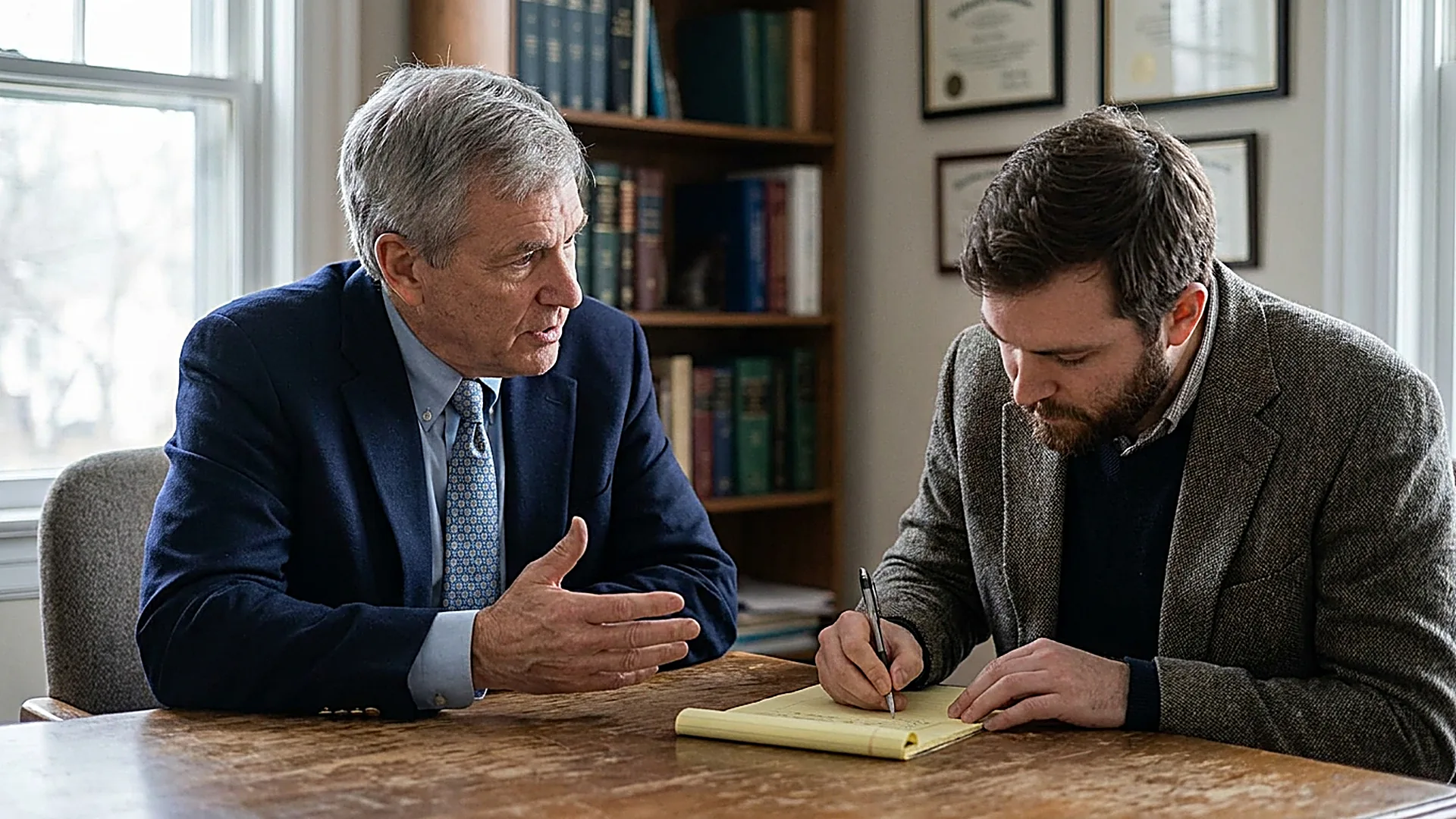
A federal prison consultant runs a parallel workflow to your criminal defense attorney. Your lawyer handles the legal arguments; the consultant handles the human narrative the probation officer will use to write §3553(a) sentencing factors.
In practice, that means mock interviews, a written mitigation memorandum, RDAP-qualification analysis, and coordination with the medical or mental-health providers whose records will land in the PSR.
The Mitigation Package
A properly prepared mitigation package delivered to the probation officer at (or shortly after) the interview typically includes:
- A personal narrative statement written in the defendant’s voice
- A life history timeline with corroborating documents
- A family-impact statement
- A substance-abuse or mental-health evaluation from a licensed clinician
- Character letters from employers, clergy, teachers, and family members
Mock Interviews and Role-Play
The consultant will run through the standard nine PSR categories with the defendant in advance, often more than once, until the answers are complete, honest, and free of the accidental self-harm that trips up unprepared defendants.
This is where a federal prison consultant with prior-served-time experience is unusually valuable: they know which answers sound rehearsed and which answers sound real.
BOP Designation Strategy
Everything the officer writes about your health, substance abuse, education, and community ties will follow you to the Bureau of Prisons Designation and Sentence Computation Center in Grand Prairie, Texas.
That is where BOP staff decide which prison you go to and whether you qualify for RDAP, First Step Act earned time credits, and camp placement.
Most federal designation decisions are made from the paperwork alone, with no input from the defendant, unless the PSR is written well enough to speak for you.
Preparing for a PSR Interview?
Federal Case Consulting works in all 94 federal judicial districts. We prepare defendants for the presentence interview, draft the mitigation package, and coordinate with your attorney through sentencing and BOP designation.
How Do You Object to Errors in the Draft Presentence Report?
Under Federal Rule of Criminal Procedure 32(f), the defense has 14 days after receiving the draft PSR to file written objections with the probation officer. Far from optional bureaucracy, it is the most important sentencing filing your lawyer will make.
In fiscal year 2024, more federal defendants were sentenced below the guideline range than within it, through a mix of government-sponsored departures and judge-driven variances, and the evidence for most of those variances lives in the objections file (USSC, 2024 Annual Report and Sourcebook).
Types of Objections
- Factual objections, the officer wrote something that is not true (wrong drug quantity, incorrect prior conviction, mistaken employment history)
- Guideline calculation objections, the officer applied an enhancement that does not fit the conduct (leadership role, obstruction, sophisticated means)
- Criminal history category objections, a stale conviction was counted, a juvenile adjudication was misclassified, or a prior sentence exceeded the guideline lookback
- Omissions, the officer left out mitigation the judge needs to see (childhood trauma, medical condition, cooperation not yet documented, substance abuse history)
What Happens Next
The officer will address each objection in an addendum to the PSR. If she agrees, the PSR is revised. If she disagrees, the objection remains “unresolved” and the judge decides it at sentencing.
Unresolved objections that affect the guideline range become the mini-hearings that shape the actual sentence imposed.
How Does the PSR Affect Your Final Federal Sentence?
The PSR drives three sentencing outcomes at once: your advisory guideline range, the judge’s §3553(a) variance analysis, and your Bureau of Prisons designation.

In fiscal year 2024, federal judges imposed within-guideline sentences in 45.7% of cases. Most of the rest fell below the range: government-sponsored departures for cooperation and fast-track disposition accounted for 20.7% (§5K1.1, §5K3.1, and other government motions), and variances outside the range accounted for 33.0%, while sentences above the range made up well under 1% (United States Sentencing Commission, FY 2024 Sourcebook, ussc.gov).
| Sentence Relative to the Guideline Range (FY 2024) | Share | What it Means |
|---|---|---|
| Within the guideline range | 45.7% | Judge follows the PSR’s guideline math |
| Substantial-assistance departure (§5K1.1) | 9.9% | Below range for cooperation with the government |
| Early-disposition departure (§5K3.1) | 7.1% | Below range under a fast-track program |
| Other government-sponsored departure | 3.7% | Below range on a government motion |
| Variance (outside the range) | 33.0% | Mostly judge-driven reductions under §3553(a) |
| Upward departure (above range) | 0.5% | Rare, usually violent-crime or repeat offenders |
Read that table carefully. More than half of federal defendants now receive a sentence below the guideline range, not within it.
That is only possible if the PSR contains, or the defense supplements, the raw material a judge needs to justify a variance. The PSR interview is where those facts either get captured or get lost.
BOP Designation Follows the PSR
Beyond sentence length, the PSR determines where you serve time, which shapes how you should be preparing for federal prison. BOP staff use the PSR to score security level, custody classification, medical care level, and program eligibility.
A PSR that documents a genuine substance-abuse history opens the door to RDAP and its up-to-12-month sentence reduction. A PSR that omits it slams that door shut.
Frequently Asked Questions
Can My Lawyer Be Present During the PSR Interview?
Yes. Under standard U.S. Probation Office practice and the Federal Rules of Criminal Procedure, defense counsel has the right to attend the presentence interview.
Virtually all federal defendants are represented by counsel under the Criminal Justice Act (18 U.S.C. § 3006A), which guarantees appointed representation when a defendant cannot afford a private attorney. Do not attend the interview without your lawyer.
How Long Does the Presentence Interview Last?
Most PSR interviews run two to four hours, though complex fraud, drug-conspiracy, or child-exploitation cases can extend to six hours or require a second session.
If you have significant medical, mental-health, or substance-abuse history, expect the longer end of the range.
Do I Have to Answer Every Question the Probation Officer Asks?
No. You retain your Fifth Amendment right against self-incrimination even after a guilty plea, especially as to uncharged conduct.
Talk to your attorney before the interview about which topics you will discuss and which you will decline. Refusing to discuss the offense itself, however, will usually cost you the 3-level acceptance-of-responsibility reduction under §3E1.1.
Can the Probation Officer Recommend a Specific Sentence?
Yes. The final PSR includes a sentencing recommendation from the officer. Judges give significant weight to that recommendation, though they are not bound by it.
Roughly 45.7% of FY 2024 sentences fell within the PSR’s advisory guideline range, and most of the rest fell below it (USSC, 2024 Sourcebook). The officer’s recommendation carries real weight, which is why the interview matters.
What If I Disagree With Facts in the Draft PSR?
Your attorney files written objections within 14 days under Rule 32(f). The probation officer addresses them in an addendum.
Unresolved factual disputes are decided by the judge at sentencing, and the judge must rule on them under Rule 32(i)(3)(B) before imposing sentence.
Should I Hire a Federal Prison Consultant Before the PSR Interview?
Ideally, yes, and as early as possible. A federal prison consultant prepares the mitigation package the probation officer relies on, runs mock interviews, and coordinates BOP designation strategy.
The value compounds: mitigation captured in the PSR shapes both the sentence and the prison you serve it in.
Final Thoughts
The federal presentence interview is not a formality. It is the moment your case stops being a set of legal arguments and starts being a story about a human being that a federal judge will read on the eve of sentencing.
Show up prepared, tell the truth, bring the documents, and, above all, have someone in the room whose job is to make sure the story on paper matches the story of your life.
A well-prepared PSR interview will not undo a federal conviction, but it will shape everything that follows it: the sentence, the prison, the programs, and the release date.
Talk to a Federal Prison Consultant
Federal Case Consulting has walked defendants through PSR interviews in courts nationwide. We prepare the mitigation, the documents, and you, before the officer ever picks up her pen.
Sources
- U.S. Sentencing Commission, 2024 Annual Report and Sourcebook of Federal Sentencing Statistics, retrieved 2026-08-04.
- Cornell Law School Legal Information Institute, Federal Rule of Criminal Procedure 32 (Sentencing and Judgment), retrieved 2026-07-10.
- Administrative Office of the U.S. Courts, Guide to Judiciary Policy, Volume 8: Probation and Pretrial Services, retrieved 2026-07-10.
- Federal Bureau of Prisons, Program Statement 5330.11: Psychology Treatment Programs (RDAP), retrieved 2026-07-10.
- U.S. Sentencing Commission, Primer on Obstruction of Justice, 2024 edition, retrieved 2026-07-10.
- Cornell Law School Legal Information Institute, 18 U.S.C. § 3553(a) (Factors to Be Considered in Imposing a Sentence), retrieved 2026-07-10.
- U.S. Sentencing Commission, U.S. Sentencing Guidelines Manual, 2024 edition, §3E1.1 (Acceptance of Responsibility) and §3C1.1 (Obstruction of Justice), retrieved 2026-07-10.